
Pilot residence
Montérégie · max power 3.2 kW · since 2022
Status—
Power—
Mining—
Revenue / day—
Heat 24 h—PC · 10 min
Waiting for the next reading…
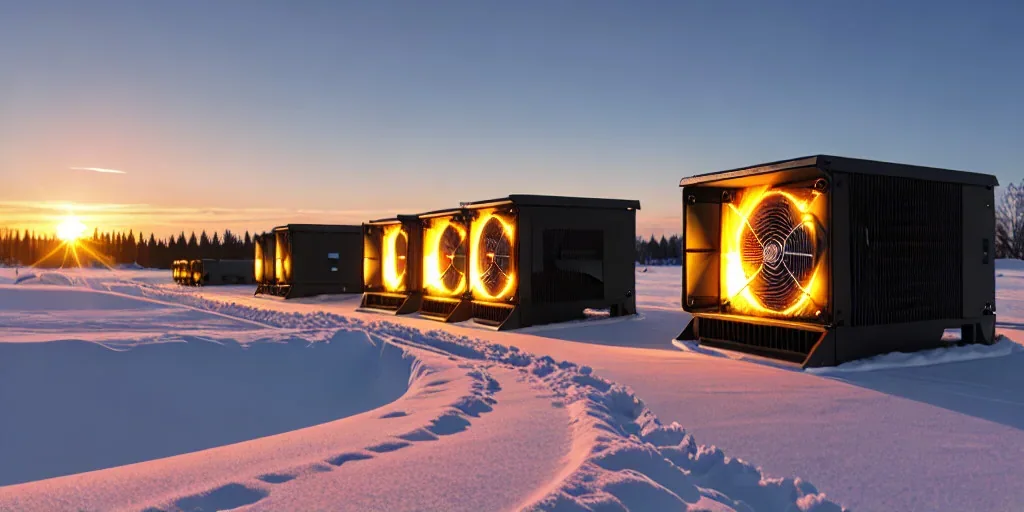
Montérégie, Quebec · since 2022
HeatSync heats buildings with the heat from computers. Every kilowatt-hour heats as much as an electric baseboard, but it computes along the way, and that computing pays: some winters, it paid for all the heating electricity. Developed since 2022, the system heats a house and heated a commercial warehouse for three winters.
Live
Connecting to sensors… straight from our sensors, with no editing or smoothing.
Montérégie · max power 3.2 kW · since 2022
Waiting for the next reading…
Montérégie · max power 17 kW · since 2023
Waiting for the next reading…
Residence · last 48 hPC · 10 minMQTT
The numbers
Each installation records a full reading every 10 minutes: temperatures, setpoint, power, mining. Here is what those readings say.
Heating the residence since 2022PC · 10 min
The mined bitcoin paid for the miner, the equipment and every kWh of electricity, with some left over. Meanwhile, the miner heated the house. Winter 2022-23 is estimated: no readings before October 2023.
*No bitcoin sold to date: calculated in real time every 10 min, at the current price ($113,800 CAD).PC · 10 min
HeatSync: the project total, bitcoin mined*, minus the price of the miner and even the electricity bill. On top of that, a house heated for free.
Electric baseboard heaters give 1 kWh of heat per kWh of electricity, just like the miner. Heating the house since 2022 would have taken the same ≈ 52,100 kWh, at 9.7¢ per kWh (taxes included): the same bill, with no mining revenue at all.
Baseboards: what it would have cost without HeatSync, the same electricity, no mining revenue.
Pilot residence · 1 miner
| Winter | Heating | Heat | Avg. power | Indoor | Outdoor |
|---|---|---|---|---|---|
| 2023-24 | 3,959 h | 10,916 kWh | 2.8 kW | 23.2 °C | 1.3 °C |
| 2024-25 | 4,231 h | 12,390 kWh | 2.9 kW | 23.0 °C | 5.3 °C |
| 2025-26 | 3,687 h | 10,178 kWh | 2.7 kW | 23.3 °C | 2.1 °C |
What each dollar of electricity brings in
Above $1, the miner paid for all the heating electricity, with some left over. In April 2024, the “halving” cut the Bitcoin network reward in half; equipment is not included in these figures.
StaticPilot warehouse · 17 kW units
| Winter | Heating | Heat | Avg. power | Indoor | Outdoor |
|---|---|---|---|---|---|
| 2023-24 | 4,285 h | 43,585 kWh | 10.3 kW | 16.1 °C | −0.2 °C |
| 2024-25 | 3,868 h | 58,448 kWh | 15.0 kW | 19.1 °C | 4.3 °C |
| 2025-26 | 3,968 h | 55,441 kWh | 14.6 kW | 16.2 °C | −0.4 °C |
Share of the warehouse heat supplied by HeatSync
The rest, in blue, comes from natural gas: 212, 113 and 406 m³ per winter on the warehouse meters, versus 1,990 m³ in 2022-23, before HeatSync. Assumptions: 10.5 kWh per m³ burned in 80% efficient appliances, 1.9 kg of CO₂ per m³, no weather correction.
StaticThe principle
An electric heater turns all the electricity it uses into heat. So does a computer: all the energy it uses ends up as heat. The difference is that along the way, it mines bitcoin.
HeatSync uses bitcoin miners (specialized computers called ASICs) that are paid to secure the Bitcoin network. That mining revenue pays for part of the electricity, and some winters, all of it.
Electric baseboard or furnace
1 use
HeatSync
2 uses
In other words: a heater that pays back part of its own bill. The revenue depends on the bitcoin price and the network difficulty; the heat, however, is guaranteed.
The technology
No black box: well-known components, assembled and programmed here. The sensors and the control software are developed in-house.
Antminer S19s of about 2.8 kW, alone or grouped into 17 kW units. All the electricity they use comes out as warm air, pushed by two 8-inch fans.
In-house ESP8266 modules: temperature and humidity indoors and outdoors, a power meter, and a protection module that measures the air at the unit's inlet and outlet.
A server decides every 60 seconds: setpoint, tolerance band, and a power level that adjusts to how fast the building warms up.
Everything goes through MQTT, on three public servers in parallel: if one goes down, the other two take over. A mobile app and a web hub display everything.
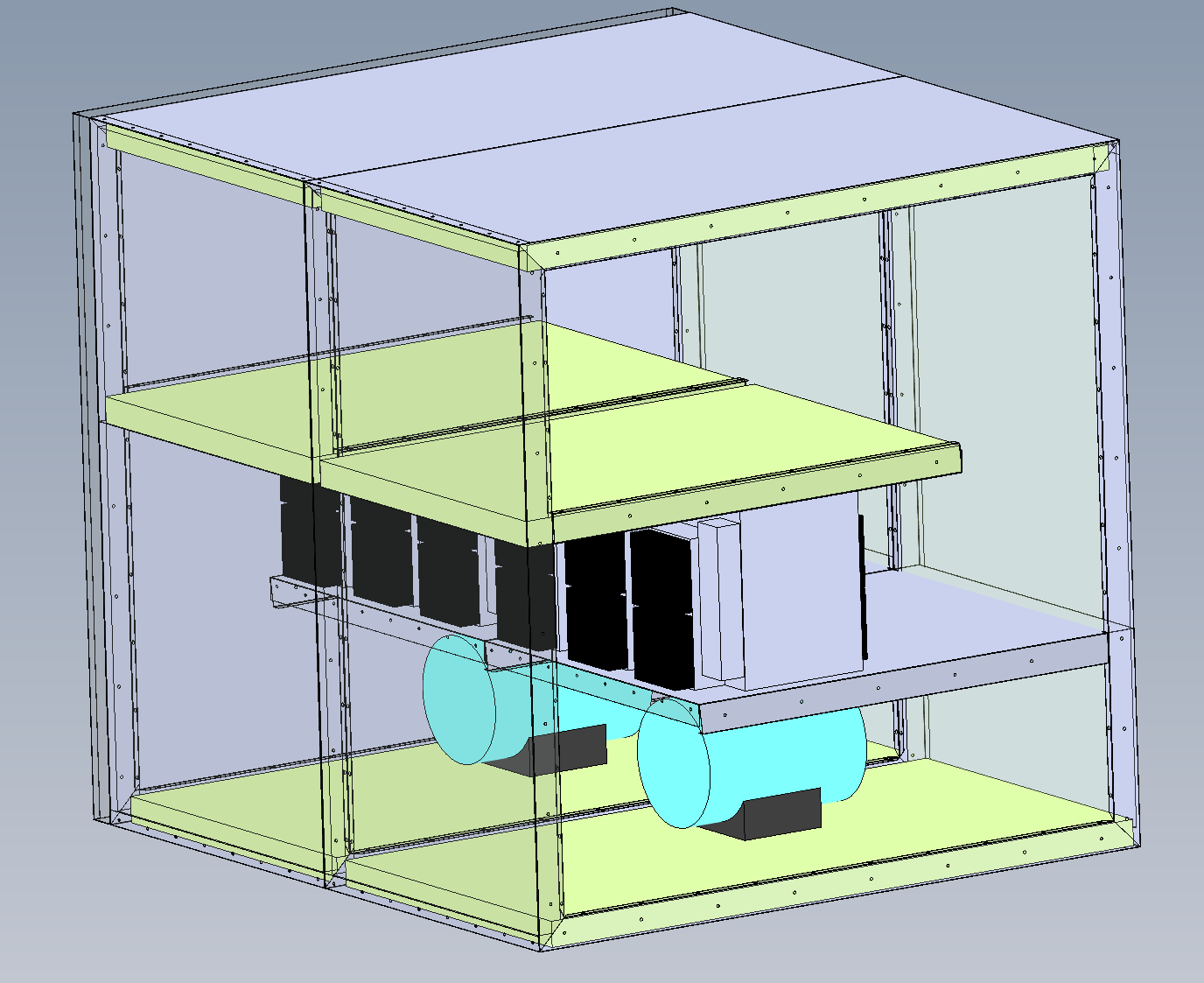
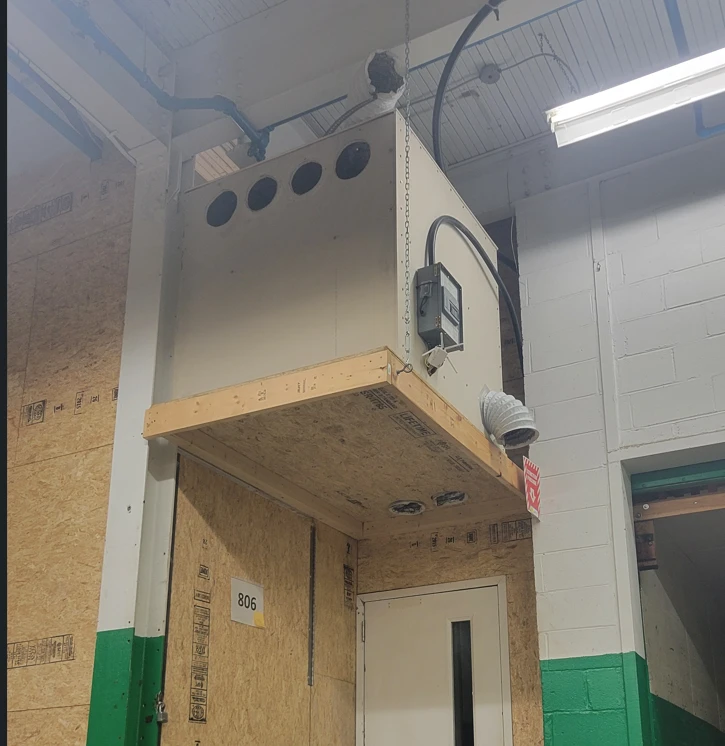
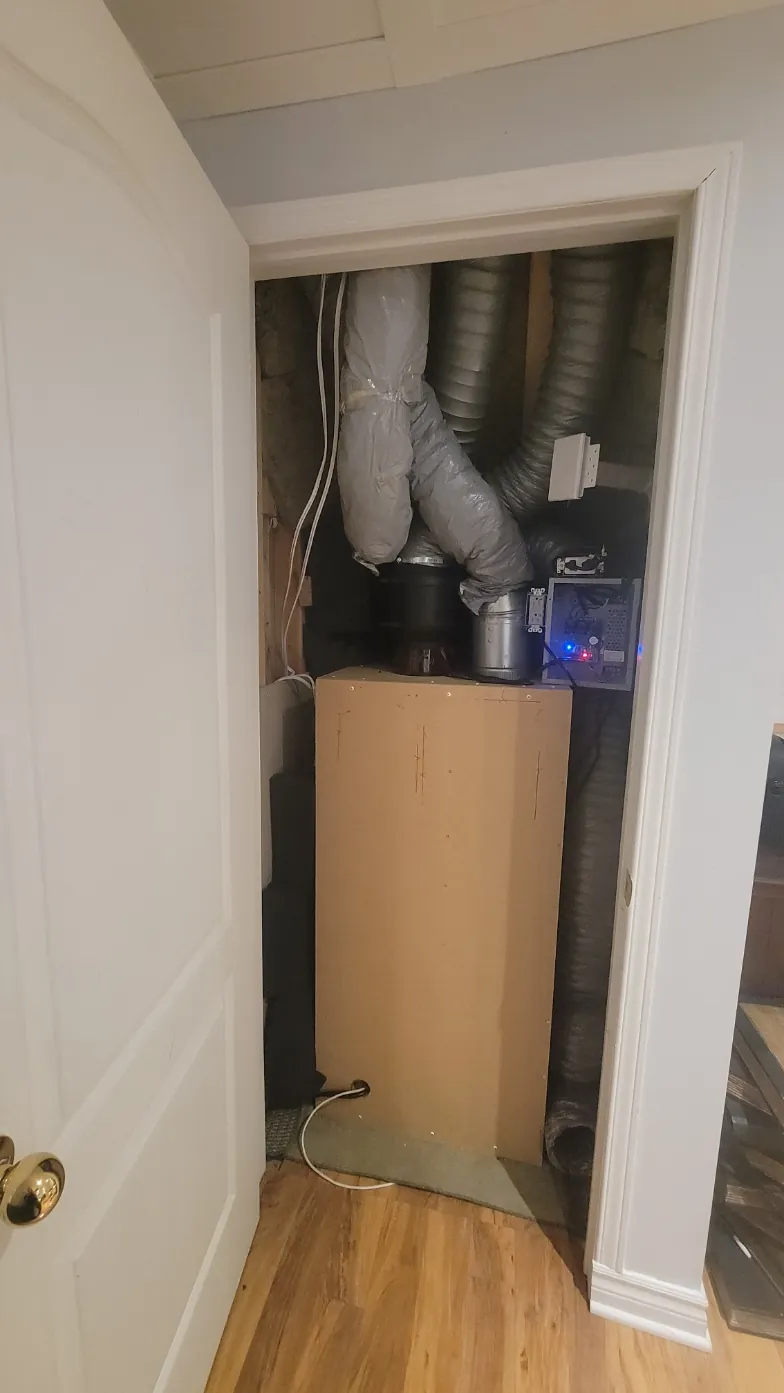
HeatSync Hub
On a PC or on your phone: temperatures, miner, energy and sensors, updated live. Tap an image to enlarge it.
Automation
The controller doesn't just follow the setpoint. It constantly checks that everything behaves as expected, and stops rather than heat blindly.
If the air leaves the unit too hot, the protection module cuts the miner and the system waits 15 minutes before restarting.
No reliable temperature reading left? Heating stops instead of guessing.
If the requested power doesn't match what the miner actually produces, it is reset automatically.
The system automatically receives peak notices, preheats the house beforehand, then cuts its consumption during the peak, to relieve the grid and avoid the peak rate.
If the control loop stops responding for 90 seconds, a new one is started.
The fans follow the difference between inlet and outlet air, even when the miner is stopped.
History
A project built in iterations, each winter serving as a test bench for the next.
First 3 kW prototype to heat a house. It is still heating.
Construction of a 17 kW unit for a commercial building, assembled in the workshop.
Commissioned at the warehouse. Improved components and new sensors, including the energy meter (kWh) and the protection module.
Problems fixed and redundancy added: near-perfect reliability.
Built a water-cooled prototype. Perfect reliability for the season: no intervention needed.
This website, a real-time dashboard, and live public measurements, right here.
FAQ
Another question? Write to us, we're happy to talk about it.
Yes. Every other heating system is an investment: its profitability is measured against its purchase price, and it never brings anything in. HeatSync, on the other hand, literally generates revenue. Its computers are bitcoin miners (Antminer S19), paid to secure the Bitcoin network, and all the electricity they use comes out as heat.
Miners aren't made for heating. Noise is the first challenge: an air-cooled miner runs at about 75 dB (an S19). That's why the units go in a warehouse, a garage or a mechanical room, inside an enclosure; liquid-cooled miners, the direction for what comes next, solve this problem. The second is distributing the heat through the building: it comes out in a single spot, and it has to be brought where it's needed. At the house, the air exchanger's ducts distribute it, and the sensors are placed in two different spots in the house.
A heat pump is better than a baseboard: it produces 2 to 3 kWh of heat per kWh of electricity. But of the three, the miner is the only one that earns money: each kWh heats as much as with a baseboard, and mining pays for part or all of the electricity. Over our three winters at the residence, each kWh of heat cost on average 9.6¢ with a baseboard and about 3 to 5¢ with a heat pump, depending on the cold. With HeatSync, it earned 2.6¢, electricity paid. The two can also work side by side.
With the Flex D rate, electricity costs less all winter, but much more during the peaks announced by Hydro-Québec. The system fetches upcoming peaks on its own, heats the house beforehand, cuts off during the peak, then restarts. It's all automatic: it lowers the electricity bill and helps Hydro-Québec get through the coldest days.
With air cooling, the system is mostly for winter. In summer, it can heat water (hot water, pool, spa) with liquid-cooled miners, or simply shut down.
From our ESP8266 sensors. They publish their measurements to public MQTT servers, and your browser subscribes to them directly: no value goes through an intermediary that could alter or smooth it.
HeatSync is a project in development, not necessarily looking for customers at the moment. Current challenges: insurance (hence the water-cooled prototype) and finding a viable business model. Pairing it with solar panels also looks like a very promising approach. In short, a project in development that keeps evolving.
Contact
HeatSync is a technology development project. Do you have a building to heat, an idea for a collaboration, or simply questions about the technology? Write to us.
Your email app opened with your message: all that's left is to send it.
Nothing opened? Write to us at info@heatsync.ca.